 Best
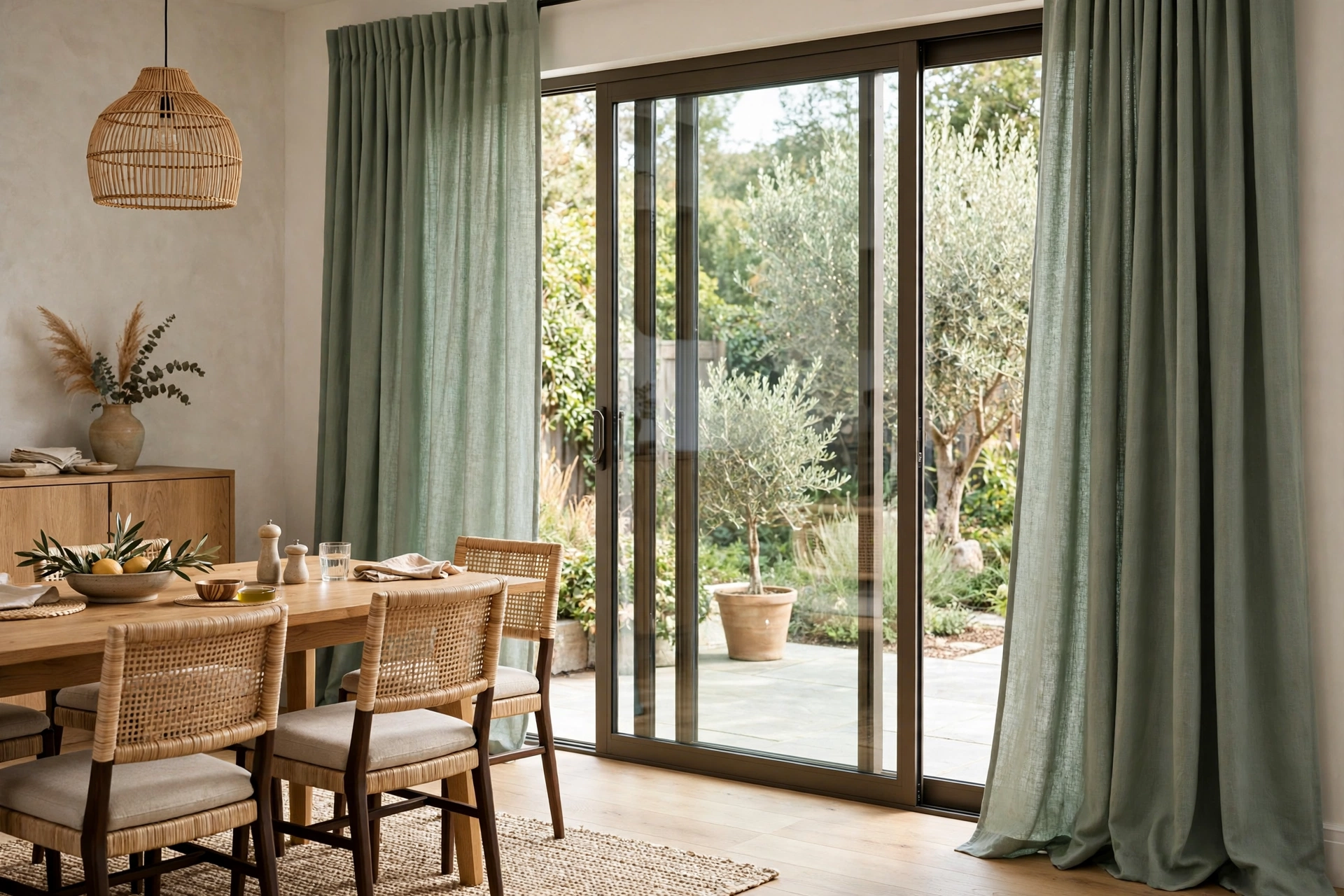
Curtain Sizes and Lengths
Pick curtain length by where the hem should land, then match that drop to a standard size. This guide gives the tables, the finishes, and the between-sizes rule.
Buying curtains gets confusing fast, because two numbers matter at once: how long the panel is, and where it ends. A panel that is the right length on paper can still look wrong if it stops in the wrong place, and a panel that looks right in one room can look wrong in another. The fix is simple. Decide where the hem should land first, measure from the rod to that point, and only then shop by size.
This guide covers the standard lengths sold in most listings, the lengths that suit each room, the four floor finishes in plain words, panel widths and fullness, and what to do when your measurement falls between two sizes. For the full measuring steps, see How to Measure for Curtains. For fitting, see How to Hang Curtains.
The short answer on curtain sizes
The short answer is this: most rooms look best with floor-length curtains, and most kitchens and bathrooms look best with short curtains that stop at or just below the sill. Start with the room, choose the finish, and measure the drop from the rod to the hem point.
That order matters. A rod hung high needs a longer panel than the same window with a rod hung low, even though the window has not changed. Measure the rod-to-hem distance for your own window, then compare it with the standard lengths below. If the listing measures length from the top of a ring or tab rather than from the rod, check that point before you order.
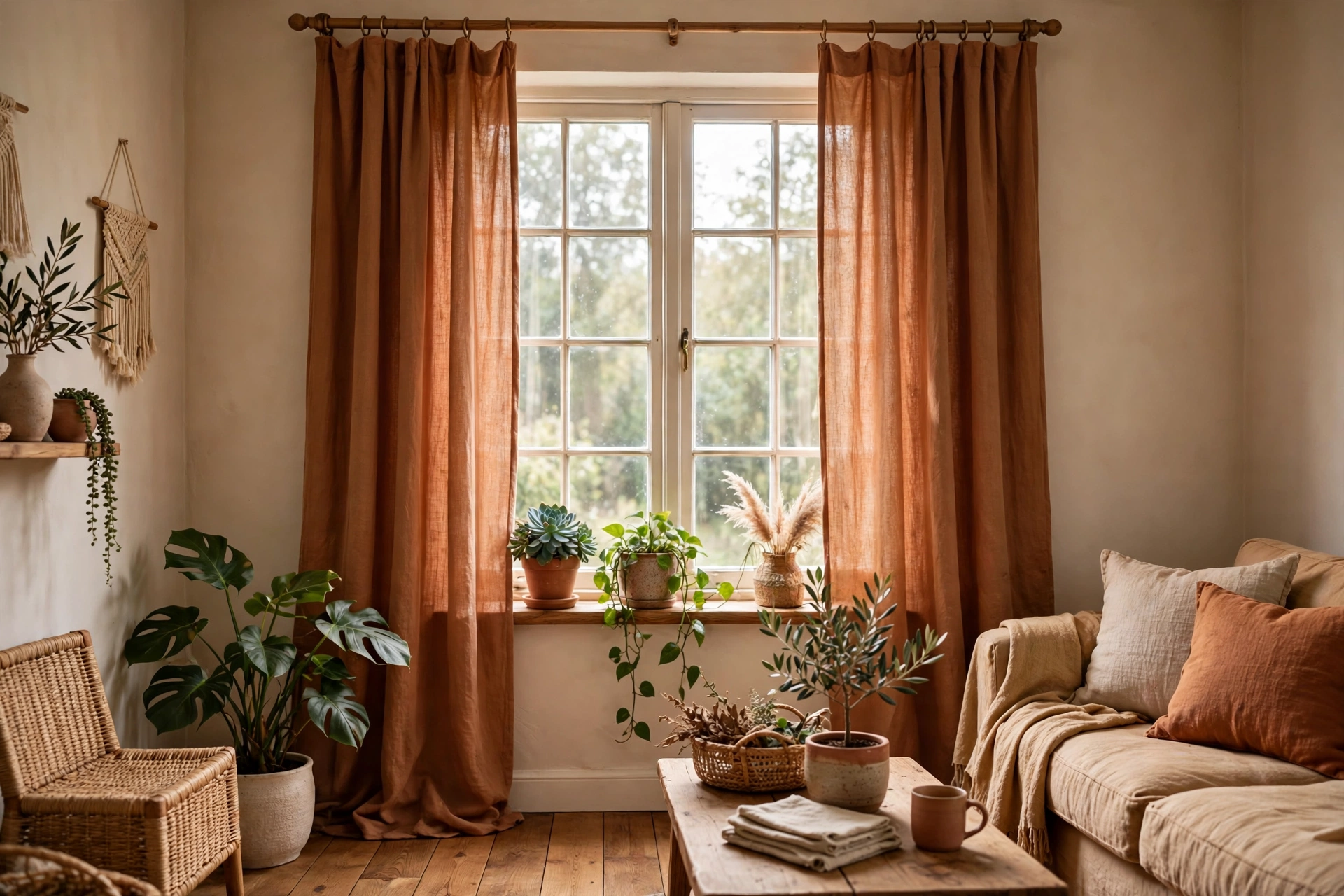
Standard curtain lengths and what each one suits
Standard lengths are the sizes most ready-made panels are sold in. Guides agree on the same core set: 63, 84, 96, 108, and 120 inches. Some listings also show 95 inches close to 96. Treat a 95-inch panel as a substitute for 96 inches only if your measured drop is 95 inches or less. On a 96-inch drop it will hover an inch above the floor, so use it only if a float finish with that gap is what you want, otherwise choose 96 inches. The five sizes below cover most homes. Sizes can vary a little by brand and by heading type, so check the listing for the exact length.
| Standard length | What it usually suits |
|---|---|
| 63 inches | Sill and apron lengths, kitchens, bathrooms, and small windows |
| 84 inches | Floor length with a lower rod, and many standard rooms |
| 96 inches | Floor length with a higher rod, and rooms with 8-9 foot ceilings |
| 108 inches | 9-10 foot ceilings, high rods, and a slight floor break |
| 120 inches | 10 foot ceilings where the measured drop fits 120 inches, tall windows, doors, and puddle finishes. Above that drop, use a custom length. |
Do not read this table as a rule for the window alone. A 63-inch panel is not a kitchen size by itself. It is a sill or apron size, and it suits a kitchen only when the window and the rod position give that drop. Match the drop, not the label.
Curtain length by ceiling height
Ceiling height sets the rough range, and your rod position sets the exact drop. Use this table to narrow the choice, then measure from your own rod to the floor before ordering. A panel that is a few inches short will show at the hem, while a panel that is a few inches long can often be hemmed or can serve as a break finish.
| Ceiling height | Usual starting point |
|---|---|
| 8 feet | 84 inches with a lower rod, 96 inches with a higher rod |
| 9 feet | 96 inches, or 108 inches with a higher rod |
| 10 feet | 108 inches, or 120 inches with a higher rod or a puddle finish |
| Above 10 feet | Measure first. Use 120 inches only if the measured drop is 120 inches or less. If the drop runs past 120 inches, a custom length is the honest answer. |
Two windows in rooms with the same ceiling height can still need different lengths. A window with a radiator below it may need a short length even in a tall room, while a low-ceiling room can still take a floor-length panel if the rod sits high and nothing blocks the hem. The ceiling table narrows the search. Your own measurement settles it.
Curtain length by room
Room use decides whether a long panel helps or gets in the way. A bedroom needs darkness and privacy at night, so a long panel that covers the full wall and meets the floor works well. A kitchen needs light, air, and a hem that stays clear of counters, taps, and heat, so a short panel works better. The table below gives the usual choice for each room, with the reason behind it.
| Room | Usual length | Why |
|---|---|---|
| Living room | Floor length, 84-96 inches in most rooms | Frames the window, suits daily opening and closing, and keeps the wall looking tall |
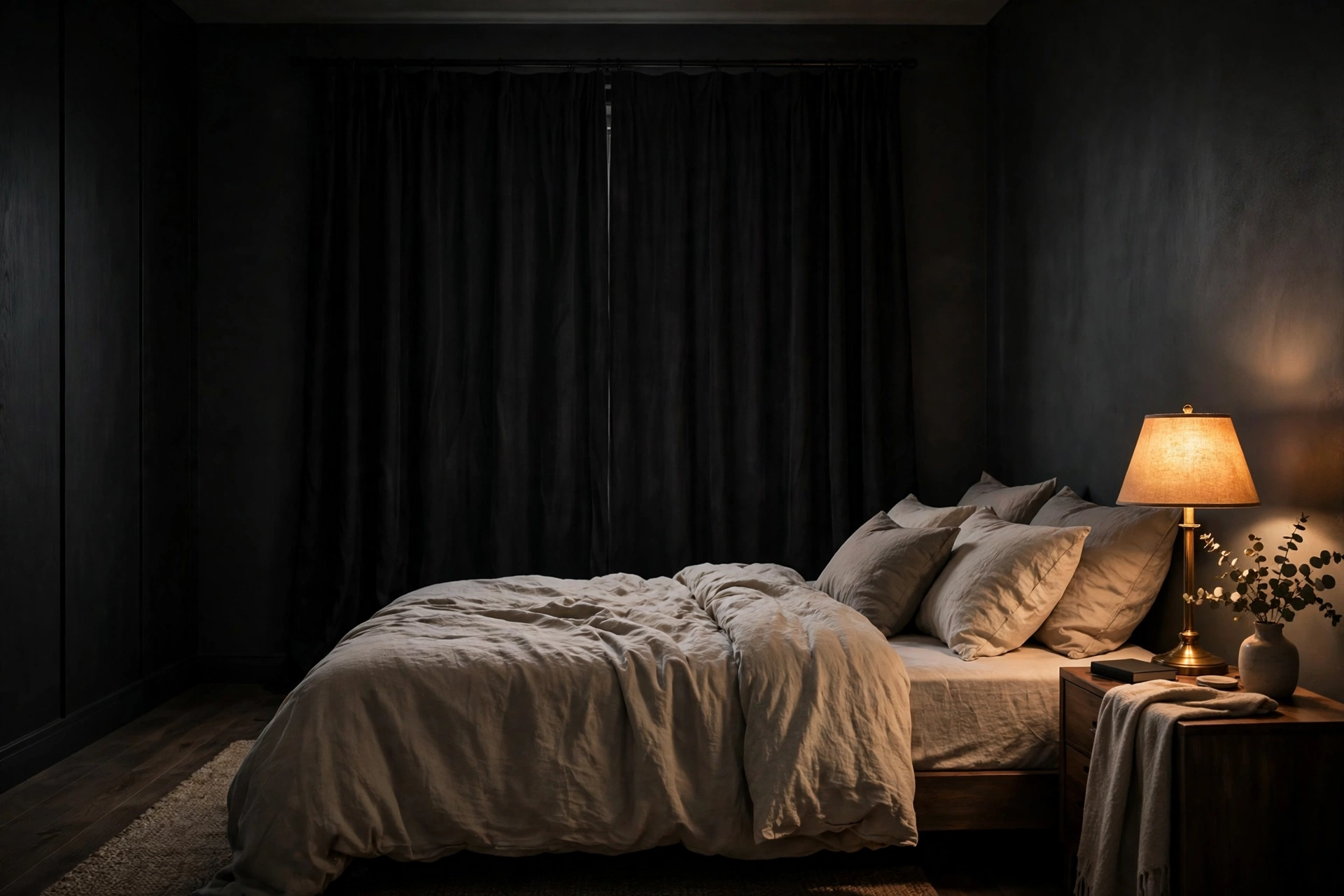
| Bedroom | Floor length, 96-108 inches in many rooms | Covers the glass fully, and with full width and overlap in the middle it blocks light at the side edges better, and suits blackout panels |
| Dining room | Floor length, kiss or float finish | Looks formal without fabric pooling where chairs move and food is served |
| Kitchen | Sill or apron length, often 63 inches | Stays clear of counters and sinks, and is easy to wash |
| Bathroom | Sill length, often 63 inches | Stays clear of moisture at floor level and keeps privacy without heavy fabric. If the drop is under 63 inches, look for a shorter ready-made cafe or tier length, or a custom length. Do not buy a 63-inch panel and hope it clears. |
| Home office | Floor length, float finish | Looks tidy on video calls and stays out of the way when opened and closed often |
These are starting points, not orders. A living room with a radiator under the window may need an apron length instead of a floor length, and a bedroom with a window seat may need a sill length for that window. Let the obstacles below the window have the final say, and check Best Curtains for Bedroom and Best Curtains for Living Room for fabric and privacy choices once length is settled.

Float, kiss, break, and puddle in plain words
Floor-length curtains come in four finishes, and the names sound fancier than they are. Each one simply says where the hem sits in relation to the floor. Once you know the four, you can read any listing or guide without guessing.
| Finish | Where the hem lands | Best for |
|---|---|---|
| Float | About half an inch above the floor | Busy rooms, pets, children, and panels opened daily |
| Kiss | Just touching the floor, with no gap | Most living rooms and bedrooms, and the tidiest tailored look |
| Break | 1-2 inches extra, so the fabric bends slightly at the floor | A relaxed, soft look, and floors that are not perfectly level |
| Puddle | Several inches extra, pooling on the floor | Formal rooms where panels stay closed and no one walks through them |
Float is the practical choice. The small gap keeps the hem off dust and clear of the vacuum, and the panel slides easily. Kiss is the classic tailored choice, but it needs a fairly level floor. Break forgives a slightly uneven floor, because the small fold hides small differences in level. Puddle looks rich in a formal room, but it collects dust and trips feet, so it suits panels that are mostly for show rather than panels pulled open and closed every day.
A hem that hovers 2-4 inches above the floor is none of these four. It reads as a panel that is simply too short. The same applies to a hem 1-2 inches above the floor: it is neither a float finish (about half an inch above) nor a deliberate short length, so it also reads as too short. If a panel must clear an obstacle, choose a deliberate short length, such as sill or apron length, rather than leaving a floor-length panel short.
Sill length and apron length
Sill length stops about half an inch above the windowsill. Apron length runs a few inches below the sill, covering the trim board under the window. Both are short lengths, and both suit windows where a long panel would cause trouble.
Choose sill length for kitchen windows above a sink or counter, bathroom windows, windows above radiators, and windows above built-in seats or desks. The hem stays clear of water, heat, and work surfaces, and the panel is easy to lift and wash. Choose apron length when a sill-length panel looks cut off, or when the trim under the window looks unfinished on its own. Apron length gives a slightly softer, more finished edge while still staying clear of the floor.
Short lengths also suit small windows, because a floor-length panel can swamp a small window and make the wall look heavy. For fabric choices in these rooms, see Best Sheer Curtains for light and daytime privacy, and Best Linen Curtains for a natural look that still washes well.
Panel widths and fullness in brief
Length gets most of the attention, but width decides whether curtains look full or flat when closed. Fullness means how much fabric covers the rod compared with the rod length. A flat panel with no fullness looks thin and stretched. A panel with generous fullness gathers into folds and looks rich even in a plain fabric.
As a brief guide, use 1.5 times the rod width for a light, flat look, 2 times for standard fullness, and 2.5 times or more for sheers and a fuller, more gathered look. The total width is the width of all panels added together, not the width of one panel. For example, a 48-inch rod at standard fullness needs about 96 inches of fabric in total, which is two panels of about 46-50 inches each, the width most single panels are sold in. A 72-inch rod at standard fullness needs about 144 inches in total, which is three panels of about 50 inches each. Wide windows often need three or four panels in total, not just a pair, to reach the fullness target.
Check the listing for panel width as well as length, because two listings can share a length and still differ in width. See Best Thermal Insulated Curtains and Best Blackout Curtains for how weight and lining change what hangs well. A heavy lined panel needs less fullness to look substantial than a thin sheer.
When your size falls between two standard lengths
When your size falls between two standard lengths, buy the longer one and hem it. This is the one rule almost every sizing guide repeats, and it holds for a plain reason: a panel can be shortened, but it cannot be lengthened without a visible join. A hem of a few inches is a normal alteration, and many buyers plan for it from the start.
There is one narrow exception worth knowing. It only works when your measurement is just above the shorter size, within about an inch of it, so the shorter size still floats about half an inch above the floor. If your measurement is well above the shorter size, the shorter panel will hover well above the floor and read as too short, exactly as warned in the finishes section. In every other case, the longer size is still the safer buy.
Before ordering, check three listing details: whether the stated length includes rings, tabs, or a header, whether the panel is sold singly or as a pair, and whether the width given is per panel or total. These checks take a minute and prevent the most common size returns.
Worked choices for three common windows
A table alone can feel abstract, so here are three plain examples. Each one starts with the window, picks a finish, and lands on a size to check against a listing.
First, a bedroom window in a room with 8-foot ceilings, with the rod hung high. The goal is darkness and a tidy look. Floor length with a kiss finish suits it, and the drop from a high rod in this room usually points to 96 inches. Width check: if the rod is 50 inches wide, standard fullness needs about 100 inches of fabric in total, which is two panels of about 50 inches each. Confirm whether the listing sells panels singly or as a pair, and that the two panels together reach that total.
Second, a kitchen window above a sink, with a counter below it. The goal is light, privacy, and a hem that stays dry. Sill length suits it, and 63 inches is the usual starting point only if the rod-to-sill drop actually measures 63 inches. Measure that drop first. Width check: if the rod is 40 inches wide, a light fullness of 1.5 times needs about 60 inches of fabric in total, which is two panels of about 30 inches each, or a wider pair checked against the listing width.
Third, a formal dining room with 9-foot ceilings and panels that will mostly stay closed. The goal is a formal look that does not pool where chairs move. Floor length with a kiss finish suits it, matching the room table, and the drop usually points to 108 inches. Width check: if the rod is 72 inches wide, standard fullness needs about 144 inches of fabric in total, which is three panels of about 50 inches each. A break finish is not used here, because the extra fabric at the floor would sit where chairs move.
When the window is not standard
Not every window fits the tables, and that is normal in older homes, bay windows, tall windows, and rooms with sloped ceilings. The method stays the same: decide the hem point, measure each window on its own, and buy for the longest drop if windows share a rod or a run. Windows that look identical can differ by an inch or two, and that difference shows at the hem.
For a window with an obstacle below it, such as a radiator, a seat, or a desk, choose the short length that clears it on purpose, and do not try to split the difference with a mid-length panel. For a very wide window or a sliding door, work out total width first, then choose panel count to reach that total. Panel count is how you reach the fullness target, not a separate choice from it. For a tall window that runs past 120 inches, or a window with an angled top, a custom length is often the honest answer.
Full measuring steps for shaped and awkward windows sit in How to Measure for Curtains, which is the right next read if your window does not match any row in the tables above.
Mistakes that make the right size look wrong
The right size can still look wrong for small reasons. A rod hung low makes even a long panel look short. Panels that are too narrow look flat when closed, even when the length is perfect. A single panel on a wide window leaves a gap in the middle. A puddle finish in a hallway becomes a trip hazard.
Check the whole window before ordering: rod position, panel width, panel count, header type, and what sits below the window. How to Hang Curtains covers that side of the job. If a panel arrives and the hem lands in the wrong place, check the listing measurement point first, then the rod height, before assuming the size itself was wrong.
Frequently asked questions
How long should curtains be for an 8-foot ceiling?
For an 8-foot ceiling, start with 84 inches for a lower rod and 96 inches for a higher rod, then measure from your own rod to the floor. The rod position decides which one fits, so the ceiling height alone is not enough to order on.
Should curtains touch the floor?
In most living rooms and bedrooms, a kiss finish that touches the floor lightly, or a float finish that sits about half an inch above it, both look tailored. A hem hovering several inches above the floor looks unfinished unless it is a deliberate sill or apron length.
What is the difference between kiss and break?
Kiss means the hem just touches the floor with no gap and no fold. Break means 1-2 inches of extra fabric, so the hem bends slightly where it meets the floor. Kiss looks crisper, while break looks softer and forgives a floor that is not perfectly level.
How wide should curtain panels be in total?
For standard fullness, aim for total panel width about 2 times the rod width. Use 1.5 times for a flatter look and 2.5 times or more for sheers and a fuller look. Add up all panels, not just one, and check whether the listing sells panels singly or as a pair.
What should I do if my measurement falls between two sizes?
Buy the longer size and hem it, unless the longer size changes the finish in a way you do not want. The only narrow exception is when your measurement is just above the shorter size, within about an inch, so the shorter size still floats about half an inch above the floor. A panel can be shortened cleanly, but it cannot be lengthened without a visible join, so the longer buy is the safer choice in most cases.
What curtain length suits a kitchen window?
Sill length suits most kitchen windows, often around 63 inches, because it stays clear of counters, sinks, and heat. Apron length, a few inches below the sill, suits kitchens where a sill-length panel looks cut off. Floor length rarely suits a window above a work surface.
Can short curtains work in a living room?
Yes, when there is a clear reason, such as a radiator, a window seat, or a desk below the window. A deliberate sill or apron length looks tidy in that case. A floor-length panel left short by accident does not, so choose the short length on purpose and let it clear the obstacle cleanly.