 Best
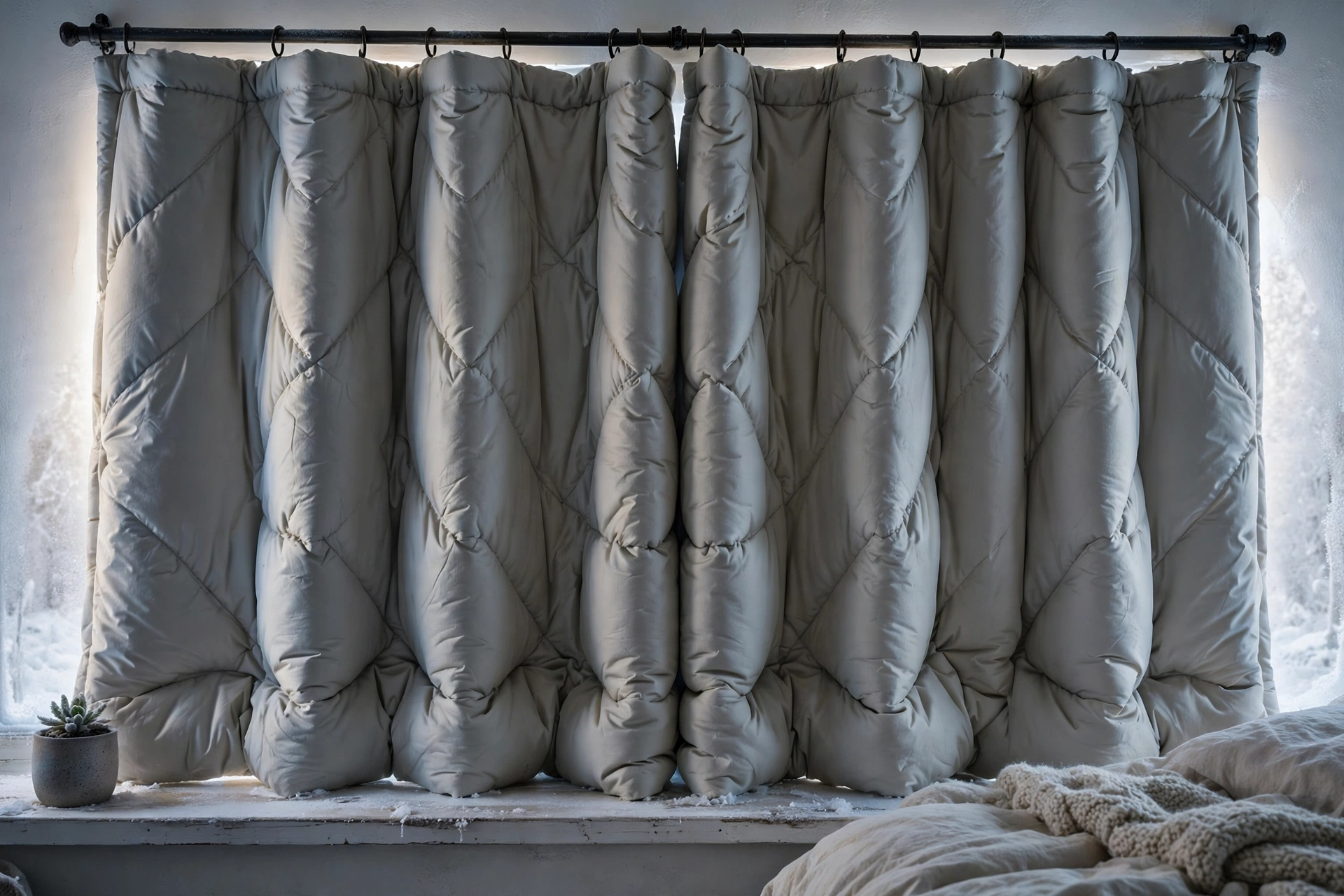
Best Thermal Insulated Curtains
Thermal curtains slow heat loss in winter and heat gain in summer, but they do not seal a drafty window. This guide splits winter and summer picks by job, covers door curtains, and shows how to hang them so they work.
If your room feels cold near the window in winter or hot near the glass in summer, a thermal curtain can help. It will not fix the window itself, and that limit matters more than any single pick on this page.
A good thermal curtain slows heat moving through glass. It traps still air between fabric and glass, and a dense core or liner slows heat transfer further. In summer, a light backing helps bounce sun heat back out. In winter, a heavy, gap-free curtain helps hold room heat in. Winter and summer do not need the same curtain at their best, so this guide keeps winter and summer picks apart, with one mid-weight compromise noted for year-round use.
Use this guide for the heat and cold job. If darkness is the main job, read Best Blackout Curtains instead. If the room itself drives the choice, read Best Curtains for Bedroom or Best Curtains for Living Room. For sizing and hanging, read How to Measure for Curtains and How to Hang Curtains.
The honest limit: what thermal curtains do and do not do
Thermal curtains slow heat loss and heat gain. They do not seal a drafty window, and they do not fix a bad window.
That distinction should shape what you buy. If cold air blows in around the frame, through a cracked seal, or under a warped sash, fabric alone will not stop it. Weatherstripping or a window repair comes first, and curtains come second. Once the worst leaks are dealt with, a heavy curtain that covers the whole window, overlaps in the middle, and hangs close to the wall can make the room feel far more even.
The same limit applies in summer. A thermal curtain can cut heat from a sun-facing window, but it cannot cool a room on its own. It is one layer in a comfortable room, not a replacement for shade, ventilation, or cooling.
Fit is the other limit buyers miss. A short, narrow panel with gaps at the sides and top lets air move around it, and moving air carries heat with it. A panel that runs high, wide, and long, and meets its partner in the middle with no gap, traps still air and slows heat moving through the window.
Winter picks that fight cold and drafts
As an Amazon Associate I earn from qualifying purchases.
For winter, pick weight, fullness, and coverage over color or pattern. A dense triple-weave fabric, a sewn-in liner, or a foam backing all add a layer between room air and cold glass, and a floor-length drop stops cold air pooling at the bottom of the window. The one exception is a window over a sink or radiator: there, use a sill length that clears the worktop or vent, and never let a panel block a radiator or heater vent.
Comparison at a glance
| Pick | Best for | Key feature |
|---|---|---|
| NICETOWN Triple-Weave Thermal Curtain | a cold room where the window feels cold to stand near, and where you want a simple, widely available thermal panel. | triple-weave construction with a dense middle layer, grommet top for easy sliding, machine washable fabric,… |
| Best Home Fashion Thermal Blackout Curtain - Best all-round winter pick | buyers who want one dependable winter curtain for a main bedroom or living room window, with strong light blocking as a bonus. | triple-weave polyester with a dense dark yarn layer, grommet top, machine washable fabric, wide size and… |
| Deconovo Thermal Insulated Blackout Curtain - Best budget winter pick | covering several windows on a budget, or trying thermal curtains in one cold room before committing to the whole house. | triple-weave construction, grommet or rod pocket top, machine washable on a cold gentle cycle, wide color… |
| Dreaming Casa Thermal Velvet Curtains - Best heavy winter feel | a cold living room or bedroom where you want a heavy, soft drape that looks warm and feels substantial when closed. | velvet face fabric with a thermal build as described by the maker, soft heavy drape, good light blocking,… |
| BGment Thermal Blackout Curtains | a south-facing or west-facing room that heats up in the afternoon, where you want thermal help plus strong light control. | triple-weave microfiber with a dense dark yarn layer, grommet top, machine washable fabric, wide color range |
| Bodulf Cross-Linen Thermal Blackout Curtains | a street-facing window where you want thermal control indoors and a neat, uniform look from outside. | linen-look face fabric, white foam backing, rod pocket, tab, and hook hanging options, strong drape |
| NICETOWN Extra Wide Patio Door Curtain | a sliding glass door or a very wide window where standard panels leave a gap in the middle. | extra wide triple-weave panel, grommet top, machine washable fabric, same color on both sides |
1. NICETOWN Triple-Weave Thermal Curtain - Best for cold, drafty windows
Best for: a cold room where the window feels cold to stand near, and where you want a simple, widely available thermal panel.
What sets it apart: this is the draft-first pick. It is chosen for cold, drafty windows first, not for looks or for summer heat.
Key features: triple-weave construction with a dense middle layer, grommet top for easy sliding, machine washable fabric, wide color range.
Panel count: confirm on the listing whether you are buying one panel or a pair before you order. A single panel on a wide window leaves a gap that undoes the benefit.
Pros:
- Dense triple-weave build suits cold rooms well
- Slides easily on a standard rod
- Easy to wash and keep in use through winter
- Plenty of colors for bedrooms and living rooms
Cons:
- Light colors let more light through and can look thinner than dark colors, so pick a dark or mid color if light control matters as well as warmth
- Needs full coverage and overlap in the middle to work well, so a single narrow panel is not enough for a wide window

2. Best Home Fashion Thermal Blackout Curtain - Best all-round winter pick
Best for: buyers who want one dependable winter curtain for a main bedroom or living room window, with strong light blocking as a bonus.
What sets it apart: this is the all-round winter pick, balanced for a main bedroom or living room, where Card 1 is aimed at the coldest, draftiest window.
Key features: triple-weave polyester with a dense dark yarn layer, grommet top, machine washable fabric, wide size and color range.
Panel count: confirm on the listing whether you are buying one panel or a pair before you order.
Pros:
- Strong all-round thermal and light-blocking build
- Drapes well and suits a main room
- Machine washable, so winter dust and marks are easy to deal with
- Wide size range covers many standard windows
Cons:
- The back shows the same color as the front. That is a plain fact, not a fault, but the street view will show the curtain color rather than a neutral white
- Creases can be hard to remove after washing, so steam or a low iron may be needed

3. Deconovo Thermal Insulated Blackout Curtain - Best budget winter pick
What sets it apart: this is the budget winter pick, chosen for covering several windows at lower cost, with a lighter feel than the heavier winter picks.
Best for: covering several windows on a budget, or trying thermal curtains in one cold room before committing to the whole house.
Key features: triple-weave construction, grommet or rod pocket top, machine washable on a cold gentle cycle, wide color range.
Pros:
- Low cost for a true triple-weave thermal panel
- Simple to hang and wash
- Works well as a first thermal curtain for a cold bedroom
Cons:
- Fabric feels lighter than premium heavy panels
- Check whether the listing price is for one panel or a pair before you order, so you do not end up short
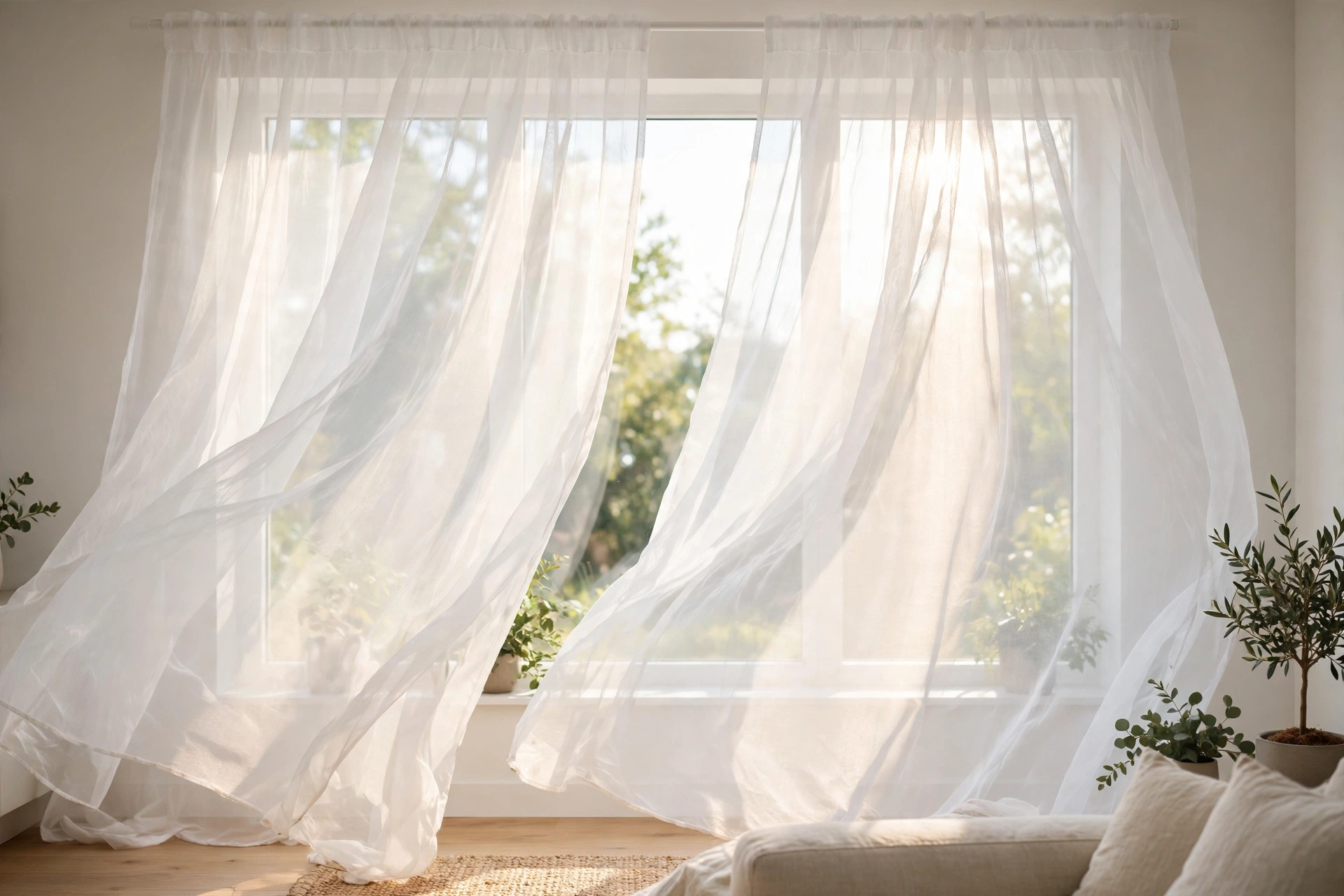
4. Dreaming Casa Thermal Velvet Curtains - Best heavy winter feel
Best for: a cold living room or bedroom where you want a heavy, soft drape that looks warm and feels substantial when closed.
Key features: velvet face fabric with a thermal build as described by the maker, soft heavy drape, good light blocking, rich color options.
Panel count: confirm on the listing whether you are buying one panel or a pair before you order. Also check the listing for a liner or dense weave behind the velvet face. If the listing shows no liner or dense layer, do not count this pick as a strong thermal pick, whatever the word thermal in its name suggests.
Pros:
- Heavy velvet drape suits cold rooms and formal living rooms
- Soft face fabric looks less plain than flat polyester
- Feels substantial when drawn across a cold window
Cons:
- Heavier than standard panels, so it needs a sturdy rod and hardware
- Velvet needs more care than plain washable polyester, so check the care label before you buy
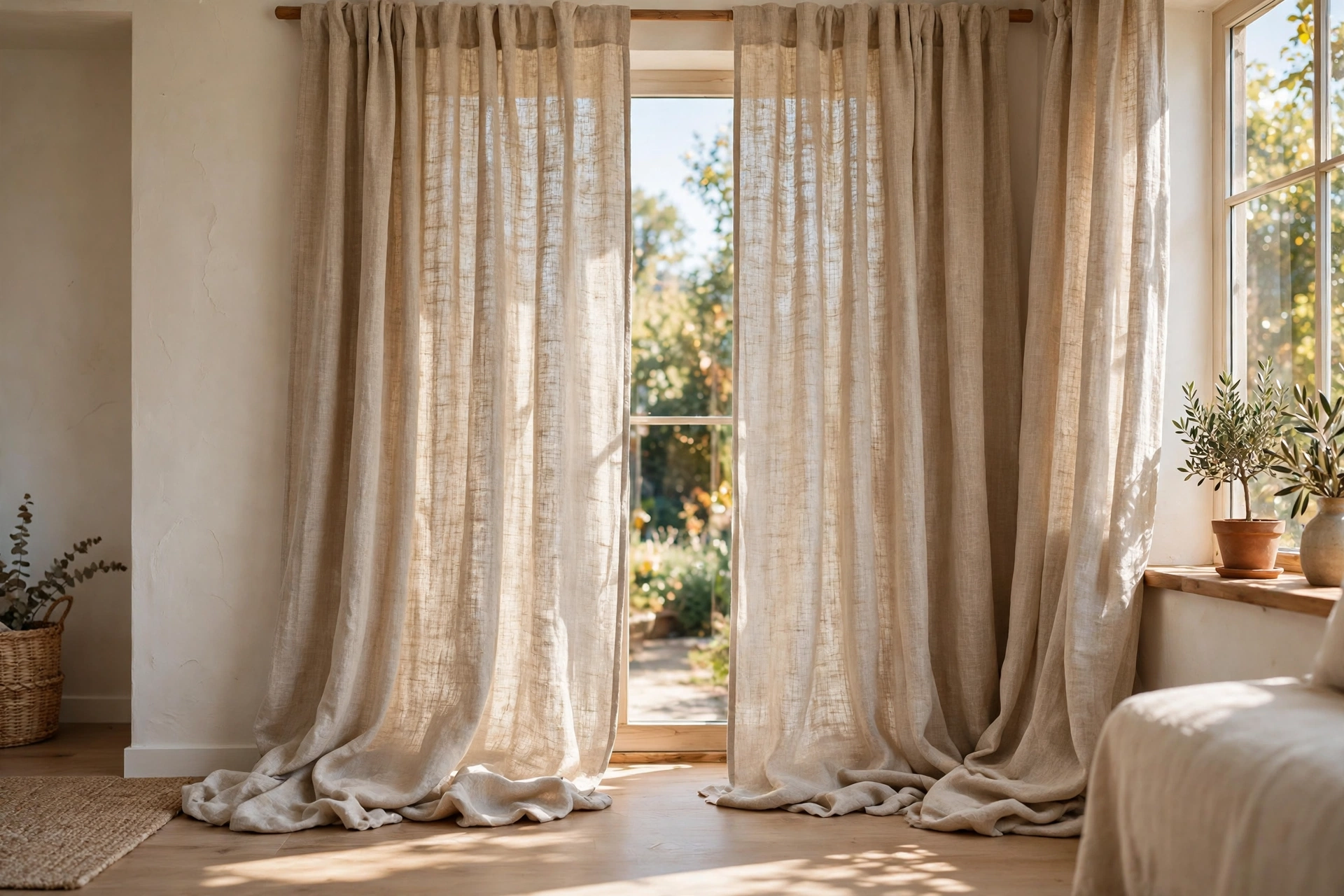
Summer picks that fight heat gain
For summer, pick a light or white backing, a dense weave, and full coverage of sun-facing glass. The side facing the glass should reflect heat rather than soak it up. Close these curtains before the sun hits the window, not after the room is already hot.
5. BGment Thermal Blackout Curtains - Best for hot, sunny rooms
What sets it apart: this is the summer pick only in its light version. Do not buy the dark face alone for a hot window.
Best for: a south-facing or west-facing room that heats up in the afternoon, where you want thermal help plus strong light control.
Key features: triple-weave microfiber with a dense dark yarn layer, grommet top, machine washable fabric, wide color range. For summer, choose a light color or a light-backed version where the listing offers one. A dark face with no light backing does not follow the summer rule in this guide.
Panel count: confirm on the listing whether you are buying one panel or a pair before you order.
Pros:
- Dense triple-weave build suits hot rooms as well as cold ones
- Wide size and color range for standard and large windows
- Machine washable and simple to keep clean
Cons:
- A dark face with no light backing absorbs more heat on the room side, so it is not a good summer choice on its own
- Like all curtains, it works best when closed before peak sun, not after

6. Bodulf Cross-Linen Thermal Blackout Curtains - Best for sun-facing rooms where the outside view matters
What sets it apart: this is the closest year-round compromise in this guide, because its white foam backing works for summer heat and its dense build works for winter, with dry-clean care as the trade-off.
Best for: a street-facing window where you want thermal control indoors and a neat, uniform look from outside.
Key features: linen-look face fabric, white foam backing, rod pocket, tab, and hook hanging options, strong drape.
Panel count: confirm on the listing whether you are buying one panel or a pair before you order.
Pros:
- White foam backing gives a uniform look from the street
- Linen look suits living rooms better than flat plain fabric
- Drapes well and feels more premium than basic polyester
Cons:
- Fewer size options than the budget picks, so measure first
- Dry-clean only care, which costs more over time than machine washable panels
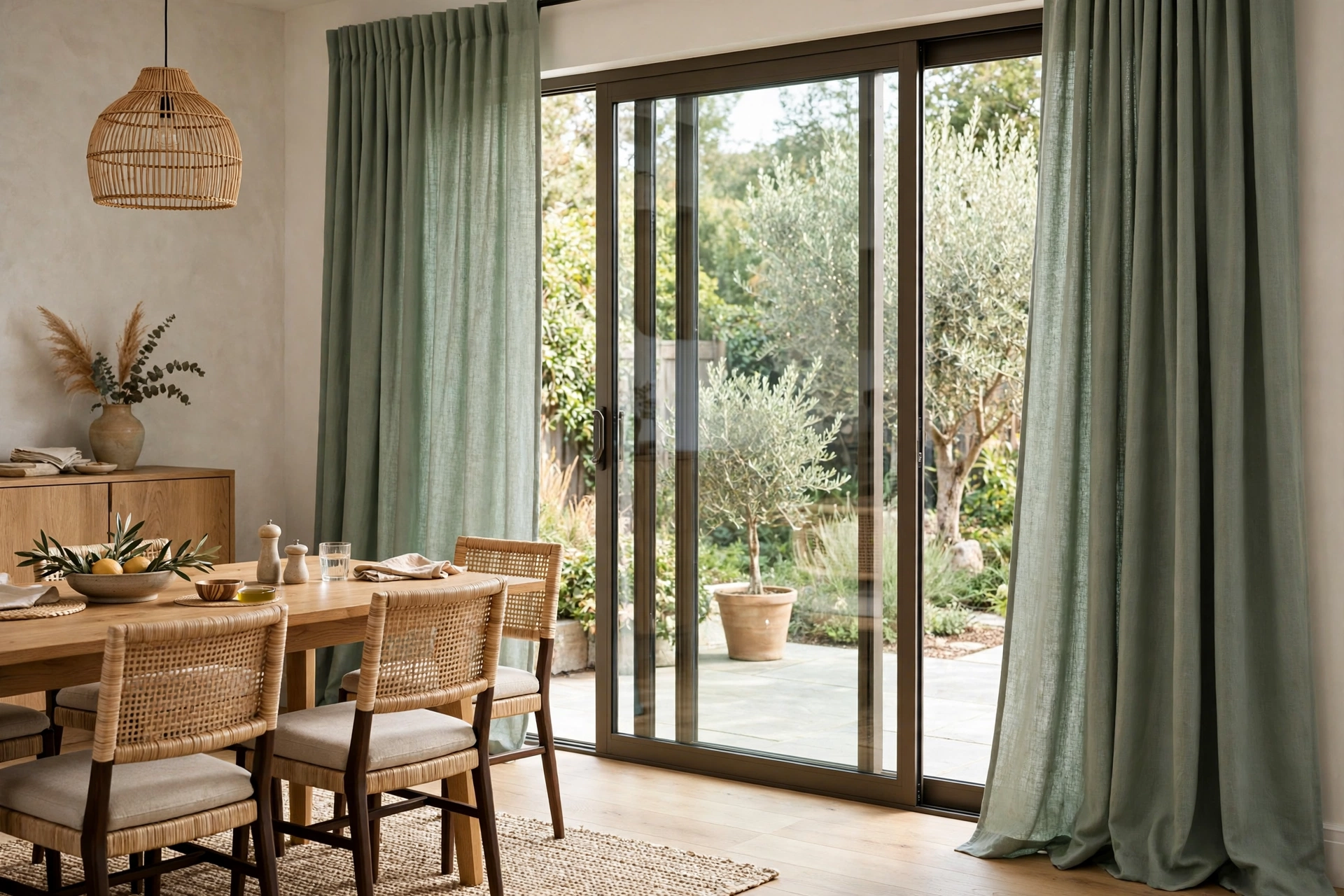
Door curtains that cover glass doors without dragging
A glass door leaks heat in both seasons because it is mostly glass, and a standard window panel is often too narrow to cover it. A wide door panel, or two panels that overlap well in the middle, is the fix. The panel must clear the handle and the floor, and it must slide freely, or it will stay open and do nothing.
7. NICETOWN Extra Wide Patio Door Curtain - Best for sliding glass doors
Best for: a sliding glass door or a very wide window where standard panels leave a gap in the middle.
Key features: extra wide triple-weave panel, grommet top, machine washable fabric, same color on both sides. Same color on both sides is a plain fact here: the street view will show the curtain color rather than a neutral white.
Panel count: confirm on the listing whether you are buying one panel or a pair before you order. For a sliding door, you need enough total width to cover the closed door plus overlap, not just one panel the width of one door leaf.
Pros:
- Wide panel covers a sliding door without a middle seam gap
- Triple-weave build gives thermal help in both winter and summer
- Grommets spread the weight and slide well on a sturdy rod
Cons:
- One wide panel may not give full darkness on its own, so add a second panel or a liner if darkness matters
- Needs a strong rod and solid hardware because of its width and weight
If the door is used many times a day, hang the panel so it stacks fully clear of the doorway when open. To stop dragging, measure the drop from the rod to the floor, then choose a length that clears the floor by a small amount and clears the door handle when the panel slides past it. A panel that pools on the floor at a door will catch, drag, and stay open. For French doors, two panels that meet in the middle often work better than one wide panel, because each side can move on its own and each side can clear its own handle. No separate French-door pick is listed here: use the same wide triple-weave type, split into two panels meeting in the middle.

How to hang thermal curtains so they seal instead of just hanging
A thermal curtain only works well when it seals the window. Hang it high, wide, long, and close to the wall, with no gap in the middle.
Mount the rod 4 to 6 inches above the frame, not on it, so the panel covers the top edge where warm air escapes. Extend the rod 4 to 6 inches past each side of the frame so the panel covers the frame edges too and stacks clear of the glass when open. Let the panel reach the floor or the sill, not stop halfway down the glass, so cold air cannot pool and spill out underneath. With two panels, overlap them in the middle so no gap shows when closed.
A wrap-around rod helps most. It curves back to the wall at each end, so side drafts have less room to slip past. Look for a wrap-around rod type when you buy the rod; no specific rod is picked in this guide. Grommet tops slide easily but leave small gaps at the top. The grommet picks in this guide are chosen for easy sliding. If drafts are your main problem, look for a back-tab or pinch-pleat version of the same curtain type, or add a liner, because that top seals better at the top edge. Heavy panels sag on a weak rod, and a sagging panel opens gaps at the top.
Exception: if a radiator, heater vent, or sink sits under the window, do not use floor length there. Use a sill length that clears the vent or worktop, and never let a panel block a radiator or heater vent.
Close winter curtains at dusk and open them on sunny winter mornings, so you gain sun heat by day and trap room heat at night. In summer, do the reverse: close sun-facing curtains before the sun hits the glass.
How to choose fabric, liner, and backing without getting fooled
Thermal performance comes from layers, not from the word thermal on the listing. Be wary of a listing that calls a single thin layer thermal with no liner or dense weave behind it.
Triple-weave means three layers woven together, with a dense middle layer that blocks light and slows heat. A sewn-in liner is a separate layer stitched behind the face fabric, and it often gives the strongest thermal and darkening result. Foam backing is a thin foam layer on the back that adds insulation and gives a clean white face to the street, but it usually needs gentler care than plain fabric. Velvet and other heavy face fabrics add weight and drape, but weight alone does not prove insulation: a heavy sheer-look fabric with open weave will still let air through.
Color matters in summer and less in winter. A white or light backing reflects sun heat back out, which is what you want on a hot window. When a listing offers a light backing option, take it for sun-facing windows.
Treat maker claims with care. Any light-blocking or energy claim in a listing is a maker claim, not a measured result for your home. Your window size, climate, heating, and fit will change the result.
Check panel count before you order. Some listings sell one panel, some sell a pair, and a single panel on a wide window leaves a gap that undoes the benefit. Check header type, care label, and size range too, and measure before you buy.
Care that keeps the insulation working
Most triple-weave polyester panels in this guide are machine washable, which suits daily use. Wash on a cold gentle cycle with mild detergent, dry on low or hang to dry, then steam or iron on low. Avoid bleach and fabric softener on thermal linings, because both can damage coatings and backing.
Foam-backed and velvet panels need more care. Foam backing can crack or peel if washed hot or dried hot, and velvet can crush if handled roughly. For those, follow the care label exactly, even if it says dry clean only, and budget for that cost before you buy. A thermal curtain that loses its backing loses much of its benefit.
Clean curtains once or twice a year in normal use, and more often in a dusty room or kitchen. After washing, rehang at the same height and width, and check that panels still overlap in the middle.
What to buy first if you can only cover one window
Start with the worst window, not the prettiest room. That is usually the largest, draftiest, or sunniest window. One well-fitted thermal curtain there will do more than thin panels on every window in the house.
If winter cold is the problem, pick a heavy triple-weave or lined panel in a dark or mid color, floor length, hung high and wide. If summer heat is the problem, pick a dense panel with a light backing for the sun-facing window, and close it before peak sun. If a glass door is the problem, pick the wide door panel first, because a door is often the largest single sheet of glass in a living room.
Then work through the rest of the house in order of window size and sun exposure, using the same hanging method on each window.
Frequently asked questions
Do thermal curtains really work?
Yes, in the sense that matters: they slow heat moving through glass. They trap still air, add dense layers, and, in summer, reflect sun heat with a light backing. They do not seal a window or replace a repair, and a badly fitted panel will do far less than a well-fitted one.
Do thermal curtains stop drafts?
They reduce the cold feel near a window, but they do not stop air leaking through the frame itself. Fix gaps with weatherstripping or a repair first, then add a full, floor-length curtain hung close to the wall to trap the remaining cold air behind the fabric.
Do thermal curtains work in summer?
Yes, if the backing is light or reflective and the curtain is closed before the sun hits the glass. A dark, thin curtain closed after the room is already hot will do little. For a sun-facing room, choose a dense weave with a light backing and keep it closed through peak sun.
What is the difference between thermal curtains and blackout curtains?
A thermal curtain is built to control temperature with layers, a liner, or a foam backing. A blackout curtain is built to block light. Most thermal curtains also block light well, but many blackout curtains have no thermal layer at all. If darkness is the main job, read Best Blackout Curtains. If temperature is the main job, stay here.
What fabric or liner is best for insulation?
Look for triple-weave fabric, a sewn-in liner, or a foam backing, in that order of simplicity. Triple-weave suits most rooms and washes easily. A sewn-in liner often gives the strongest result. Foam backing gives a clean street view but needs gentler care. Avoid a single thin layer sold as thermal with no layer behind it.
Should thermal curtains touch the floor?
For winter, floor length is best, because it stops cold air pooling and spilling out underneath. For a sill-length window over a sink or radiator, sill length is fine, but the panel must still cover the frame and overlap in the middle. Never let a panel block a radiator or heater vent.
Can one set of curtains work all year?
Yes, as a compromise, not as the best winter set and the best summer set at once. Pick a dense panel with a light backing and hang it well: closed at night in winter, closed against sun in summer. The closest pick in this guide to that compromise is the Bodulf linen-look panel in Card 6, because its white foam backing works for summer and its dense build works for winter, with dry-clean care as the trade-off. A very heavy velvet set may feel too much in a hot summer room, so a mid-weight triple-weave set is often the better year-round choice.
How we chose
This guide is honest research-based curation, not hands-on testing. Picks were chosen from the thermal curtain types most often recommended for cold and hot rooms, with weight given to triple-weave construction, a liner or foam backing, full coverage, and simple care. No product here was tested by us, and no energy saving is promised for your home. Check the listing for panel count, size range, header type, and care label before you order, because listings change.