 Best
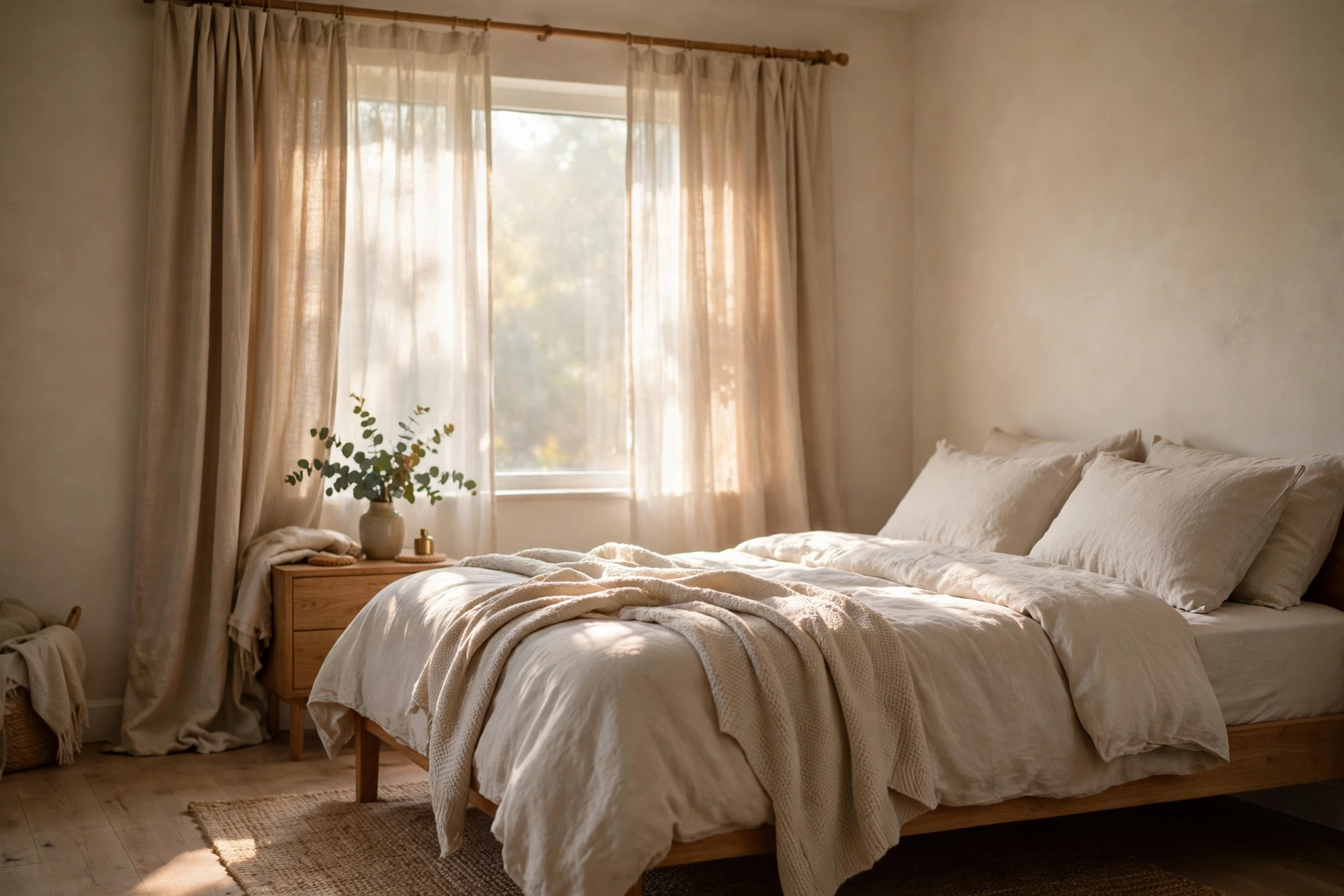
Best Curtains for Bedroom
A bedroom guide to curtains that help you sleep, covering blackout panels, liners, rods, color, fabric and day-to-night layering.
A bedroom curtain has one job above all: it should help the room feel dark, private and calm at night, and pleasant during the day. Sleep depends on the whole window set-up, not on one panel alone.
This guide starts with the sleep job, then builds the set-up around it: panel, liner and rod together, plus color, fabric, layering and care. For deeper detail on darkness alone, see Best Blackout Curtains. For warmth at the window, see Best Thermal Insulated Curtains.
What bedroom curtains should do first
Bedroom curtains should first block the light that wakes you, then give privacy after dark, then soften the room. Style should follow those three jobs, not lead them.
Start by naming the light problem in your room. Early sun, a streetlight, passing headlights, and daylight during a day sleep all call for different levels of darkness, and a bright street-facing room needs a stronger plan than a room with little direct light.
Privacy is the second test. A sheer alone can screen the view in daylight, but once bedroom lights are on at night, people outside can often see in, so many bedrooms need a solid closing layer for the evening. The third test is how the room feels by day: a lined panel in a soft color, paired with a sheer, can keep the room bright in daylight and dark at night.
Three sleep jobs that change the pick
The right bedroom curtain depends on who sleeps in the room and what disturbs that sleep. Three common sleep jobs need different set-ups.
A light sleeper wakes at small changes in light. For this job, darkness is the priority, and so are the edges. A blackout panel or liner helps only if the panels meet in the middle, reach the floor, and extend past the sides of the window. Check the listing for a blackout lining rather than trusting a dark color alone.
A shift worker sleeps while it is light outside. For this job, daytime darkness matters most, and the set-up must work without fuss. A simple grommet panel that slides shut in one motion suits tired hands better than a fussy heading. Pair it with a sheer for daytime hours between sleeps, when the room is used in daylight, so the room does not feel shut away all day. At night, close the blackout panel, because a sheer alone gives little privacy once bedroom lights are on.
A street-facing bedroom faces lamps, traffic and neighbours. For this job, privacy and light control matter together. A sheer layer gives daytime privacy, and a blackout front layer gives full privacy and darkness at night, on a double rod. Two more rooms use the same jobs. A guest room suits a soft neutral blackout panel, such as Pick 3, which feels relaxed without giving up darkness. A child's room often needs a light sleeper's darkness, plus washable fabric and no loose cords in reach: choose a cordless or wand-operated option, check the listing for cordless operation before ordering, and keep any cords out of reach. For a street-facing bedroom, there is no separate street pick in the list below: use Pick 1 or Pick 2 as the front blackout panel on a double rod, with Pick 6 as the sheer at the glass, plus a wrap-around rod and a center overlap to seal the sides.
The full bedroom set-up: panel, liner and rod
The best bedroom result comes from a panel, a liner and a rod chosen as one set-up, not as three separate buys.
The panel is the face you see, setting color, texture and style. A linen-look panel feels light and relaxed, velvet feels warm and cocooning, and polyester panels are often the easiest to care for. The liner does much of the sleep work: a blackout liner blocks light through the fabric, while a standard lining adds body and some privacy but not the same darkness. A separate liner can save a panel you already like. The rod decides how well the set-up closes: a short rod leaves side gaps, and a sagging rod will not close cleanly, so match the rod to the panel weight, use a center support on a wide window, and use a double rod for a layered window.
Buy in this order: decide the darkness level, pick the liner that gives it, choose a panel you like in a fabric that suits that liner, then choose a rod strong enough to carry both. Skip the separate liner step when the pick already has a blackout lining sewn in, as Picks 3 and 4 do. Use a separate liner only for unlined or standard-lined panels. No rod or liner is picked by brand in this guide: rods and liners are chosen by weight and window, so use the set-up above (a double rod for layering, a sturdy rod for heavy panels) and check the rod listing for its weight rating.
Blackout or room-darkening: which label fits your sleep
A blackout label fits sleepers who need the room as dark as possible. A room-darkening label fits sleepers who want softer light and privacy without full darkness.
Blackout means the fabric or lining is made to block light through the material itself. Room-darkening cuts down a lot of light but does not promise the same darkness, and a dark color alone does not turn a room-darkening panel into a blackout panel.
If you wake at dawn, sleep in daylight, or face a streetlight, choose blackout. If you like waking with some daylight, room-darkening may suit you better. If you are unsure, blackout with a sheer layer is the safer pair. The blackout guide linked in the introduction gives the full comparison.
Color and fabric choices that help a room feel restful
Soft, muted colors help a bedroom feel restful. Deep, calm colors can do the same job in a different way.
Soft neutrals such as ivory, oatmeal, beige, taupe, soft grey and warm white suit most bedrooms, keeping a small room feeling open and pairing with most bedding. Muted blue and sage green also read as calm without feeling cold.
Deep colors such as navy, charcoal, forest green and deep plum create a cocooning feel in larger rooms. Very bright colors, such as vivid red or bright yellow, tend to energise a room, so keep those for cushions or art rather than a full window of fabric.
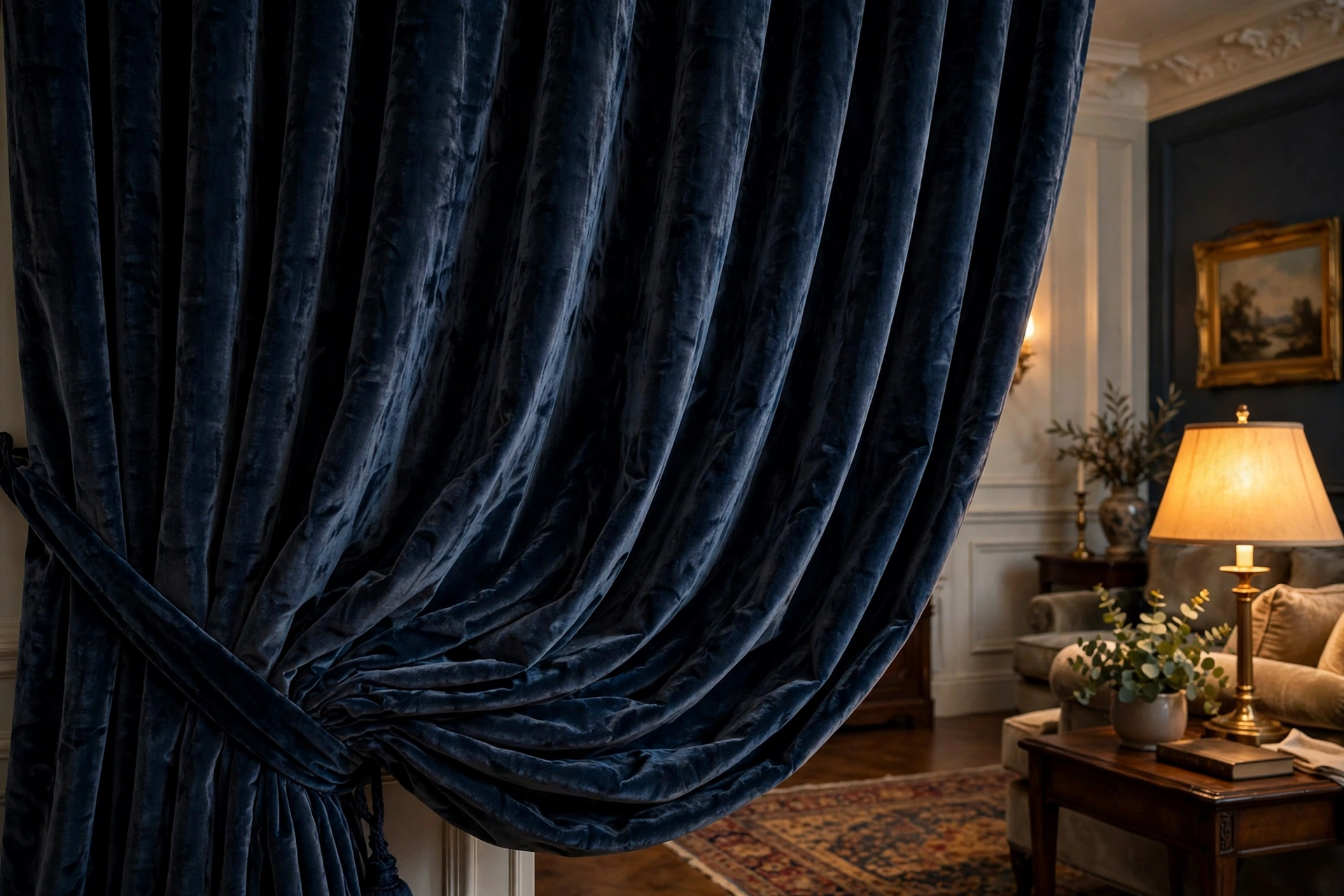
Fabric shapes the feel as much as color. Cotton suits relaxed bedrooms, linen blends feel natural and airy but crease, velvet feels rich and warm, and polyester blends are practical and often easy to wash. Silk looks elegant but needs more care. Test color in your own light before you commit: a swatch viewed in morning light and evening lamplight tells you more than a screen photo.
Layering for day use without losing night darkness
Layering gives one window two moods: soft daylight and privacy by day, full darkness at night.
The usual order is a sheer closest to the glass and a heavier or blackout panel on the room side, on a double rod or double track. By day, close the sheer and open the front panel for filtered light and daytime privacy. At night, close the front panel for darkness and full privacy.
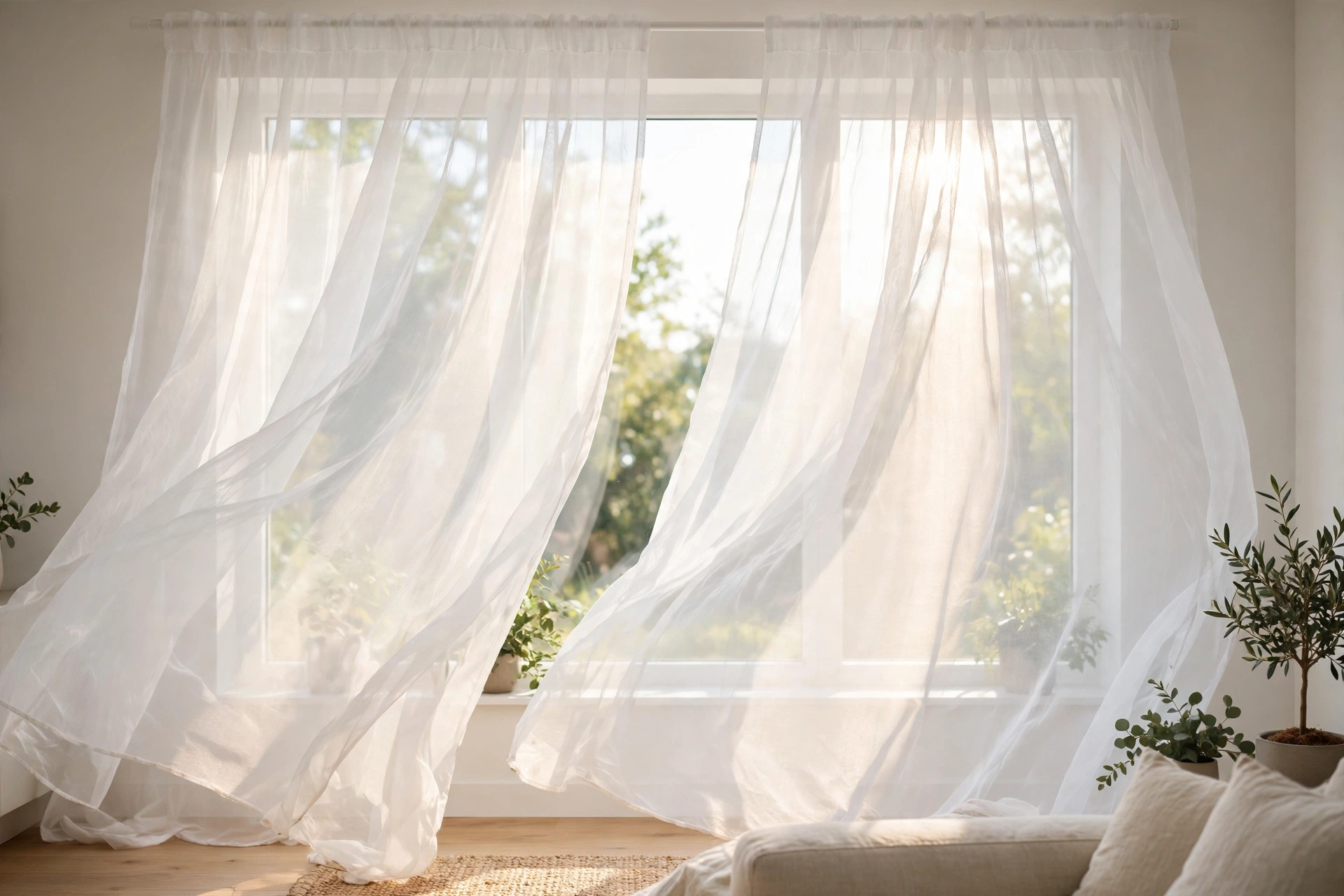
A white or ivory sheer softens harsh sun, screens the street view in daylight, and keeps the room feeling open. A sheer alone is not a sleep solution, since it lets in light and gives little privacy once bedroom lights are on, so treat it as the day layer. For more on sheer fabrics, see Best Sheer Curtains.
Keep colors close: a white or pale sheer with a soft or deep front panel usually looks calmer than two competing patterns. If you use a pattern, keep it to one layer and leave the other plain.
How to measure and hang for fewer light leaks
If a rod is already hung, measure it first. If no rod is hung yet, hang the rod higher and wider first, as the hang guide below explains, then measure from the rod position, not just the window glass.
For width, order total panel width of about 2 times the rod width for standard fullness, so the closed panels meet and overlap slightly in the center, with fullness in the folds. When closed, curtains must cover the full rod span and overlap in the middle. When open, they bunch at the sides and do not cover the full rod, so do not judge closed coverage by the open look. For length, floor length suits most bedrooms, while sill length suits a window above a bed, a desk or a radiator.
Hang the rod above the frame and wider than the frame, so the panels sit past the glass when closed and clear it fully when open. For measuring detail, see How to Measure for Curtains. For hanging detail, see How to Hang Curtains.
After hanging, check the closed curtains in the dark for leaks at the top, sides, center join and floor. A wider rod, a longer panel, a center overlap, or an added liner can each close a different leak.
Care that keeps bedroom curtains working well
Bedroom curtains last longer and keep working better with simple, regular care.
Vacuum panels with a soft brush head every few weeks to keep dust out of the folds, and shake panels outside before washing. Always follow the care label, since velvet, silk and lined panels often need different care from plain polyester or cotton.
Many polyester and cotton panels can be machine washed on a gentle cold cycle. Put grommet panels in a large mesh bag so the rings do not mark the drum, dry on low heat or hang to dry, and rehang while slightly damp so the folds fall back into shape. Steam a hanging panel to remove fold lines, and keep a hot iron away from plastic rings and coated linings.
If the liner is separate, wash it apart from the face panel if the label allows it, and check it after washing for stiffness or peeling, which can reopen light gaps. A sewn-in lining cannot be washed apart, so follow the panel's own label instead.
Our bedroom picks
The picks below cover two of the three sleep jobs directly (Pick 1 for light sleepers, Pick 2 for shift workers), plus a soft-looking blackout option (Pick 3), a tailored look (Pick 4), a simple set for a spare room (Pick 5), and a day layer (Pick 6). For a street-facing bedroom, use Pick 1 or Pick 2 as the front blackout panel, with Pick 6 as the sheer at the glass, on a double rod. Read the best-for line first. Check panel count (one panel or a pair), size, lining, and care label on the listing before you order.
As an Amazon Associate I earn from qualifying purchases.
Comparison at a glance
| Pick | Best for | Key feature |
|---|---|---|
| NICETOWN Thermal Insulated Grommet Blackout Curtains | a light sleeper who wakes at early sun or streetlight and wants a dark room with a simple hang. | triple-weave style blackout fabric; thermal insulated design for a drafty window; grommet top for a standard… |
| Deconovo Blackout Curtains | a shift worker who sleeps during the day and needs a set-up that closes fast and stays dark. | blackout fabric with a layered build; grommet top for a quick slide shut after a night shift; machine… |
| MIULEE Blackout Linen Curtains | a bedroom that should feel relaxed and textured, not heavy, while still blocking morning light. | faux linen face fabric with a blackout build behind it; grommet top; soft neutral colors for wood, white… |
| Vision Home Blackout Pinch Pleated Curtains | a main bedroom where you want structured folds and a finished look, with blackout lining sewn in. | linen-blend face fabric with a blackout lining sewn in; pinch pleat heading for a rod or track with rings and… |
| SimpleHome Grommet Blackout Curtains | a spare bedroom, a rental bedroom, or a first blackout set where a simple, easy hang matters most. | grommet top that slides straight onto a rod; blackout fabric made to cut light and give evening privacy;… |
| RYB HOME Linen Sheer Curtains - Best as the day layer in a layered bedroom | the day layer in a layered set-up, paired with a blackout front panel for night. | lightweight linen-textured sheer that filters daylight into a soft glow; grommet or rod pocket styles, so… |
1. NICETOWN Thermal Insulated Grommet Blackout Curtains - Best for light sleepers
Best for: a light sleeper who wakes at early sun or streetlight and wants a dark room with a simple hang.
Key features: triple-weave style blackout fabric; thermal insulated design for a drafty window; grommet top for a standard rod; a wide range of colors and sizes on the listing.
Pros: strong darkness when hung wide and to the floor; simple grommet hang suits daily use.
Cons: lighter colors may let in more light if the lining is thin, so with a pale panel check the lining, not the color, since a true blackout lining keeps a pale panel dark; heavy panels need a sturdy rod on a wide window.
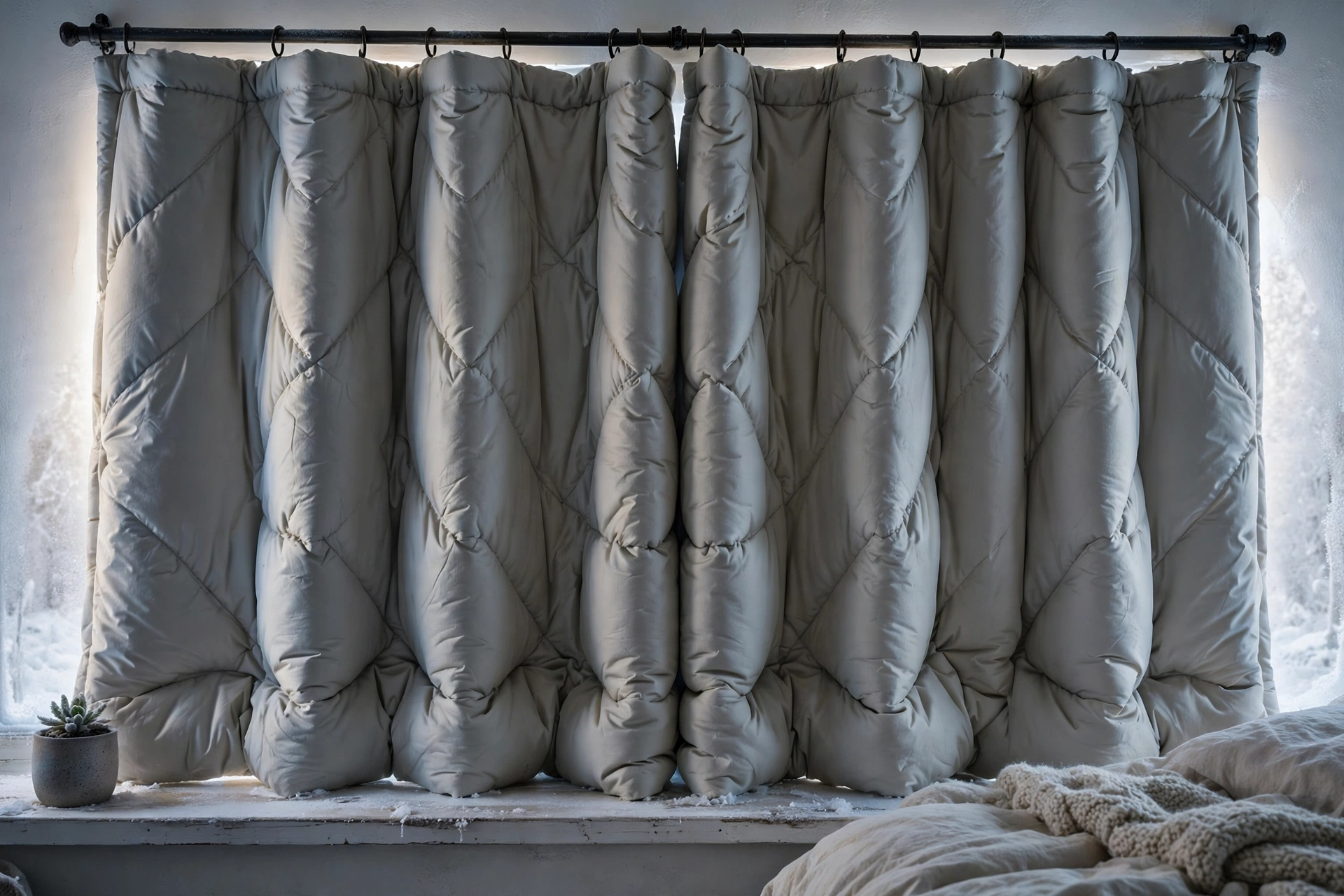
2. Deconovo Blackout Curtains - Best for shift workers sleeping in daylight
Best for: a shift worker who sleeps during the day and needs a set-up that closes fast and stays dark.
Key features: blackout fabric with a layered build; grommet top for a quick slide shut after a night shift; machine washable fabric on many listings, so check the care label.
Pros: daytime darkness without a fussy heading; easy to open between sleeps.
Cons: lighter shades may show more light if the lining is thin, so check the lining, not the shade, since a true blackout lining keeps a pale panel dark; needs full width and floor length, so measure with care.
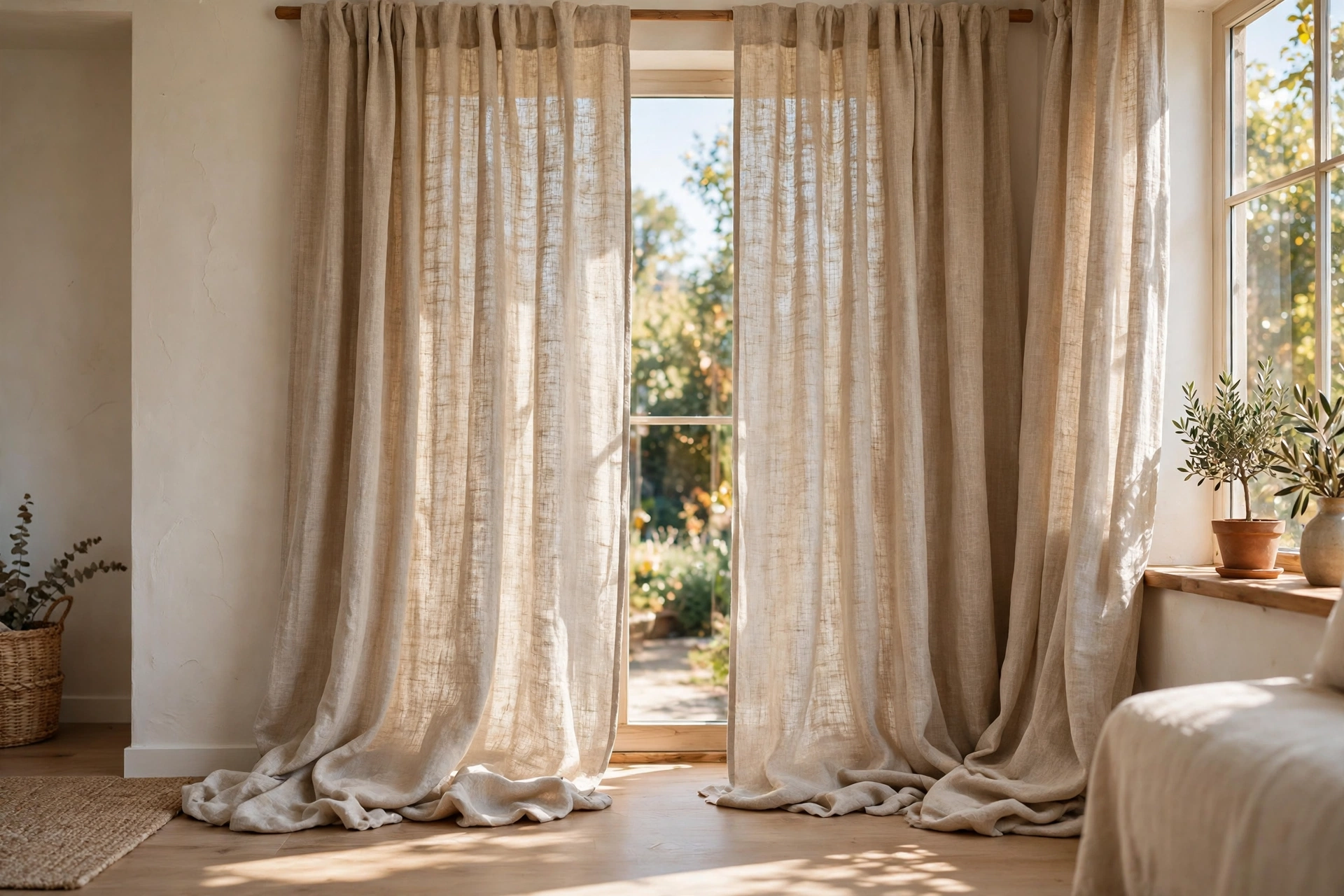
3. MIULEE Blackout Linen Curtains - Best for a soft-looking bedroom that still needs darkness
Best for: a bedroom that should feel relaxed and textured, not heavy, while still blocking morning light.
Key features: faux linen face fabric with a blackout build behind it; grommet top; soft neutral colors for wood, white bedding and pale walls.
Pros: linen look softens a heavy-panel room; blackout build gives real sleep darkness.
Cons: linen-look fabric can wrinkle and may need steaming; screen color can differ from room color.
4. Vision Home Blackout Pinch Pleated Curtains - Best for a tailored bedroom look
Best for: a main bedroom where you want structured folds and a finished look, with blackout lining sewn in.
Key features: linen-blend face fabric with a blackout lining sewn in; pinch pleat heading for a rod or track with rings and hooks.
Pros: sewn-in lining needs no separate liner; pinch pleats give a tidy finish.
Cons: needs rings and hooks, so check the heading fits your rod or track; structured panels need more washing care.
5. SimpleHome Grommet Blackout Curtains - Best for a spare room or a first blackout set
Best for: a spare bedroom, a rental bedroom, or a first blackout set where a simple, easy hang matters most.
Key features: grommet top that slides straight onto a rod; blackout fabric made to cut light and give evening privacy; plain colors that work in most spare rooms.
Pros: simple grommet hang, like Picks 1 to 3, with no extra hardware; plain, simple panel for a spare room.
Cons: plain look may feel too simple for a main bedroom; needs careful measuring to avoid light gaps.

6. RYB HOME Linen Sheer Curtains - Best as the day layer in a layered bedroom
Best for: the day layer in a layered set-up, paired with a blackout front panel for night.
Key features: lightweight linen-textured sheer that filters daylight into a soft glow; grommet or rod pocket styles, so check the heading that fits your double rod.
Pros: daytime privacy without shutting out daylight; softens a plain blackout panel.
Cons: no real darkness on its own, so it must pair with a blackout layer; little privacy at night, so close the front panel.
For the room-by-room starting point behind these picks, see Best Window Curtains, the main guide for window curtains as a whole.
Mistakes that leave a bedroom bright at night
The wrong panel is rarely the only problem. Fit and habit cause most bright bedrooms.
Buying by color alone is the first mistake: a dark panel without a blackout lining can still let light through, while a pale panel with a true blackout lining can keep a room dark.
Ordering too little width is the second mistake: panels that just meet in the middle leave a center gap. Order enough width for overlap and folds, and hang the rod wide enough for the panels to sit past the glass. Hanging too low and too narrow is the third mistake, leaving light at the top and sides, so hang higher and wider. Leaving the sheer as the only night layer is the fourth mistake: sheers are for day, so close the solid layer every night. Skipping the post-hang check is the last mistake: check after dark and fix each leak with width, length, overlap or a liner.
How we chose these picks
We chose these picks from research, not from hands-on testing. We read bedroom curtain guides and listings, compared darkness, lining, heading, fabric and care, and matched each pick to a sleep job rather than ranking by looks alone.
We left out products with only a dark color and no clear lining, products with no clear heading type, and products that offered neither a bedroom sleep job nor a bedroom look with real darkness. We also left out any claim we could not support, such as a maker light-blocking figure copied as fact. Use the best-for line, measure your window, and check size, lining and care label before you order.
Frequently asked questions
Should bedroom curtains be blackout?
Blackout suits most bedrooms where sleep matters. Room-darkening suits a room with soft light where you like waking with some daylight. If you sleep in daylight, face a streetlight, or wake easily, choose blackout and pair it with a sheer for day use.
What color curtains are best for a bedroom?
Soft neutrals, muted blue and sage green suit most bedrooms. Deep navy, charcoal and forest green suit a larger room or a cocooning mood. Very bright colors tend to energise a room, so save them for accents, and test a swatch in your own light.
Should bedroom curtains touch the floor?
Floor length suits most bedrooms: panels that end at the floor look finished and leave no light strip at the bottom. Puddled panels, with fabric pooling on the floor, collect dust and can trip, while sill length suits a window above a bed, a desk or a radiator.
Do bedroom curtains help with street noise?
Heavier fabric and layers can soften sound, since mass absorbs some sound, but curtains do not block noise fully. If noise is your main problem, treat curtains as one softening layer, and look at the window seal and glazing as well.
Can I add a blackout liner to curtains I already own?
Yes, in many cases. A separate blackout liner hung behind a panel you like can add darkness without replacing the whole window. Check how it attaches, whether it fits your rod or track, and whether it can be removed for washing.
Are sheer curtains enough for a bedroom?
Sheers alone are not enough for sleep: they filter daylight and give daytime privacy, but they let in light and give little privacy at night once bedroom lights are on. Use a sheer as the day layer, with a blackout panel in front for night.
How do I stop light leaking around blackout curtains?
Start with fit: hang the rod higher and wider than the frame, use floor-length panels, and overlap the panels in the center. Then check after dark at the top, sides, center and floor, and add a liner, widen the rod, or lengthen the panel to close the leak you find.
How often should I wash bedroom curtains?
Vacuum with a soft brush every few weeks, and wash when they look dusty or smell stale. Many polyester and cotton panels wash on a gentle cold cycle, but always follow the care label: velvet, silk and lined panels often need gentler care or dry cleaning.